Low maintenance yard ideas often get read as "less landscape": gravel instead of plants, or a big empty lawn. But the yards that are truly easy to look after are usually well designed, not stripped back.
These are the design decisions that cut the most work, without making the yard feel bare.
1. Right-size the lawn
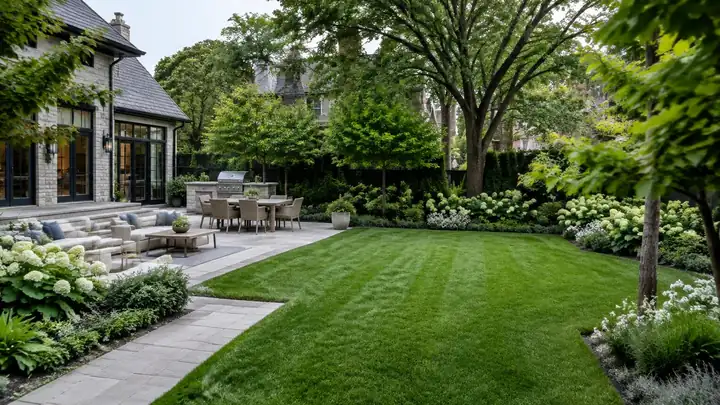
Lawn is one of the highest-maintenance surfaces in a yard: weekly mowing, edging, watering in dry spells, feeding and overseeding. Keep lawn where it earns its place, for play, pets and open space, and replace awkward strips, steep slopes and shady corners with planting or hardscape. Shapes matter too: simple, gentle curves are faster to mow than tight corners.
A simple lawn shape bordered by beds is quicker to mow and edge.
2. Choose plants for the site
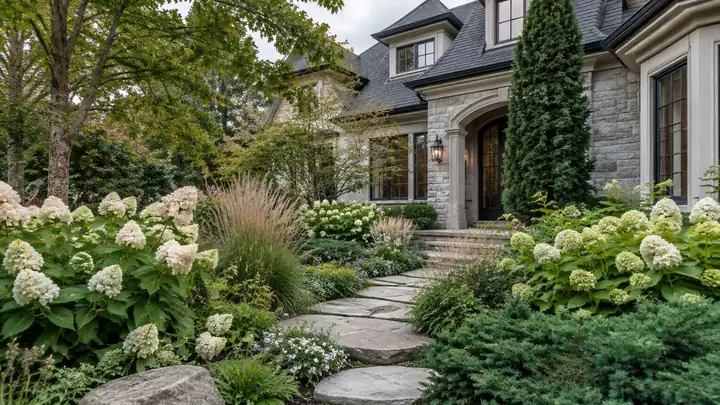
Plants that suit your sun, soil and moisture need less help. Plants pushed into the wrong conditions need extra water, pruning, spraying and replacing. Favour long-lived shrubs and perennials over annuals, and include natives and other plants that are hardy in our climate.
3. Plant for mature size
A lot of pruning comes from plants that were placed too close to walls, paths or each other. Spacing by mature width looks a bit sparse at first, which mulch or groundcovers can fill, but it saves years of cutting back.
4. Cover the soil
Bare soil invites weeds. Between plants, use a layer of mulch or a low groundcover. As plantings fill in, they shade out most weeds on their own.
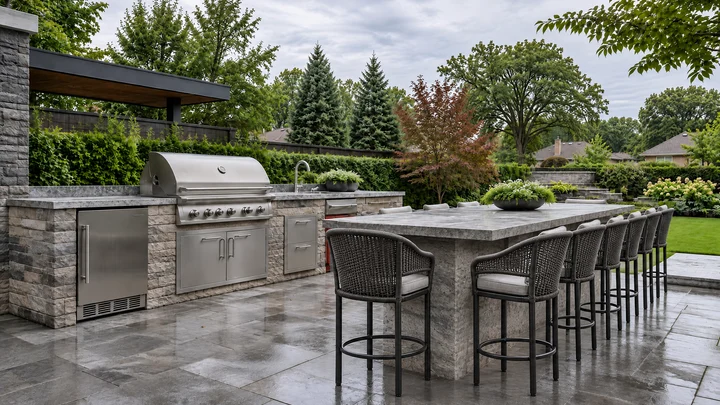
Hard surfaces and simple planting keep weekend chores short.
5. Edge everything cleanly
A defined edge between lawn and beds, and between beds and paths, stops grass creeping in and gravel or mulch spilling out. Steel, stone or concrete edging costs more upfront than a cut edge, but it eliminates a job you would otherwise repeat all season.
6. Choose durable hardscape
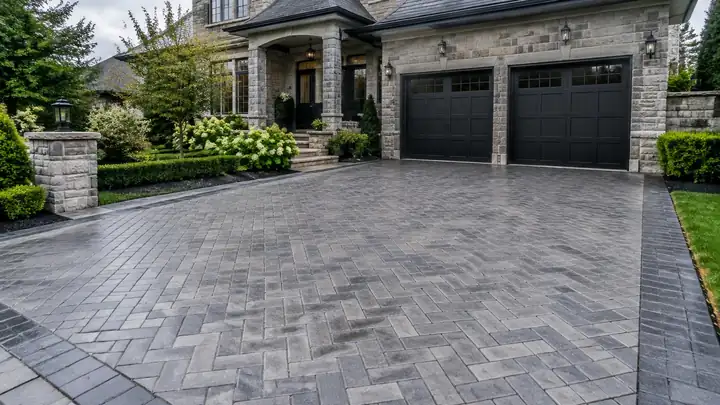
Patios, paths and walls take the pressure off planted areas. Choose materials and bases that won't need constant repair: properly installed pavers or natural stone, walls with good drainage behind them, and slopes that send water away.
7. Automate watering
A drip irrigation system on a timer delivers water to plant roots with less waste than sprinklers, and means you aren't dragging hoses around in July. A rain sensor stops it from running during wet weather.
Low maintenance starts on paper, with the layout.
Where to spend and where to save
✓Spend on: base preparation, edging, soil improvement and good-quality shrubs and trees.
✓Save on: one-season annuals, high-upkeep features you won't use, and lawn in places nobody walks.
✓Phase it: build the bones first (grading, hardscape, trees), then fill in planting over a season or two.
Common questions
Is artificial turf low maintenance?
It removes mowing and watering but has its own upkeep: brushing, rinsing, removing debris, and it gets hot in full sun. It suits some uses, such as small play or pet areas, better than whole yards.
Is gravel a good alternative to lawn?
Gravel can work in paths and dry, sunny areas, but without proper edging and fabric it collects leaves and weeds. Planted beds with mulch often need less work than large areas of loose stone.
How much maintenance will a new garden need?
The first season needs the most: watering and weeding while plants establish. After that, a well-designed garden typically needs a spring cleanup, a mulch top-up, occasional weeding and some pruning.