How to Write a Commercial Landscape Maintenance RFP
Most problems with a commercial landscape contract start before the season does, in a landscape maintenance RFP that left too much open to interpretation. When every bidder reads the scope differently, the lowest price is rarely the best value.
This guide is for property managers, condo boards and facility leads. It covers what to include in a maintenance RFP so the bids you get back can be compared line by line.
1. Describe the property, not just the address
Give bidders a site map with areas marked, and list the quantities you know: turf area, number and size of planting beds, length of hedges, number of trees, hard surfaces to keep clean, and any slopes, ditches or retention ponds. Bidders who walk the site will check, but a shared baseline stops one company from pricing 2 hectares of lawn and another 1.5.
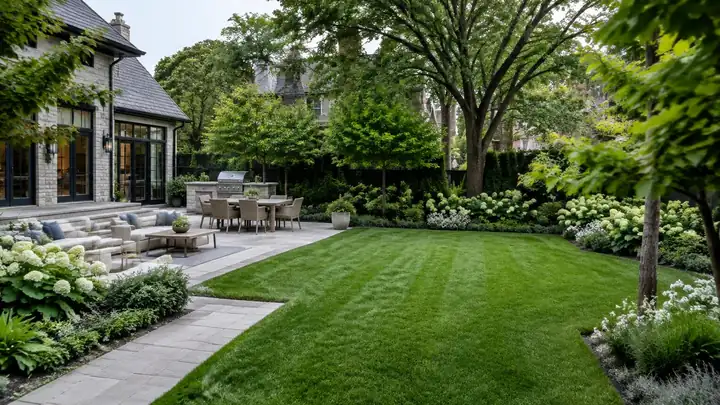
Mark lawns, beds and hard surfaces on a site map so every bidder prices the same thing.
2. Write the scope as tasks with frequencies
Instead of "maintain grounds," list each task and how often it happens. A clear way to do it is a table in your RFP with three columns: task, frequency, and standard. For example:
•Mowing: as growth requires, typically weekly in peak season; no more than one-third of the blade removed per cut.
•Trimming and edging: every mowing visit along walks, curbs and beds.
•Bed maintenance: weeding every two weeks; mulch top-up once in spring.
•Shrub and hedge pruning: one or two times per season, depending on species.
•Spring and fall cleanup: leaves, debris and winter damage, with dates or triggers.
•Litter pickup: every visit, across lawns, beds and parking islands.
Listing a standard as well as a frequency matters. "Edged every visit" means little if one crew edges with a string trimmer and another cuts a clean line.
3. Separate base work from extras
Ask for a fixed price on the base scope and unit prices for extras: per-visit irrigation checks, per-yard mulch, hourly rates for storm cleanup, per-plant seasonal colour. That way, when something comes up mid-season, the price is already agreed instead of negotiated on the spot.
4. Address Ontario's pesticide rules up front
Ontario's cosmetic pesticides ban limits most pesticide use on lawns and landscaped areas, including commercial ones. Ask bidders to describe how they keep turf healthy within those rules, for example mowing height, aeration, overseeding and soil care, rather than expecting a spray program. It is a good test of who understands modern turf care.
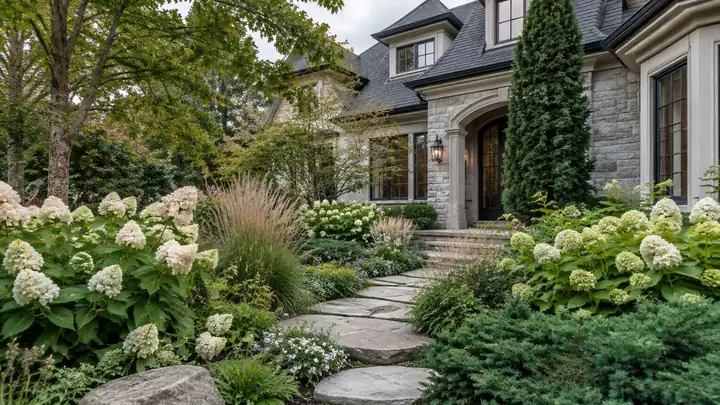
Mowing height and clean edges are where standards show first.
5. Ask how they will report
Good contractors can tell you what was done, when, and by whom. Ask what reporting is included: a visit log, photos, notes on issues found (a broken irrigation head, a dying tree, a trip hazard), and a single contact for scope changes. Reporting is what lets a board see value, and it is what protects you if there is ever a dispute.
6. Cover insurance, safety and site rules
✓Proof of commercial general liability insurance, with your property named where required.
✓WSIB clearance for workers in Ontario.
✓Working hours, noise limits and any tenant-specific restrictions.
✓Where crews park, stage equipment and dispose of green waste.
7. Make the bids comparable
Give every bidder the same pricing form. Ask for the price broken down by task and season, the crew size and visit length they are planning, and the equipment they will use. When two bids differ by 30%, the breakdown usually shows why, often because one bidder planned a three-person crew for 40 minutes and the other a two-person crew for two hours.
Seasonal cleanups are often where bids differ most: ask for dates and what is included.
A simple RFP outline
Property description, site map and quantities
Contract term and start date
Scope table: task, frequency, standard
Extras with unit prices
Reporting and communication
Insurance, WSIB and site rules
Pricing form and submission deadline
Common questions
How long should a maintenance contract be?
Many properties use a one-season contract with the option to renew, or a multi-year term with an annual price review. A longer term can give better pricing and continuity of crew; a shorter one keeps flexibility. State your preferred term in the RFP so bids are priced the same way.
Should snow removal be in the same RFP?
It can be, but price it as a separate schedule. Landscape maintenance and snow removal have different triggers, equipment and insurance considerations, and keeping them separate makes both easier to compare.
How many bids should we get?
Three to five qualified bids is common. More than that makes comparison harder without adding much. Pre-qualify bidders on insurance, WSIB and similar properties served before sending the full RFP.