Signs Your Yard Needs Regrading, and What It Involves
Yard regrading starts with one fact: water always finds the lowest point. If your yard was graded poorly when the house was built, or has settled since, that low point may be right against your foundation.
Regrading reshapes the ground so rain and snowmelt move away from the house and off the lot properly. Here are the signs that your yard needs it, and what the work involves.
Warning signs to look for
✓Puddles that sit on the lawn or patio for a day or more after rain.
✓Damp walls, efflorescence (white powder) or leaks in the basement after storms.
✓Soil that slopes toward the house instead of away from it.
✓Downspouts that empty right beside the foundation.
✓Gaps opening between the foundation and the soil, or settled flower beds along the walls.
✓Water from your yard flowing onto a neighbour's, or theirs onto yours.
✓Mulch or soil washing across paths after heavy rain.
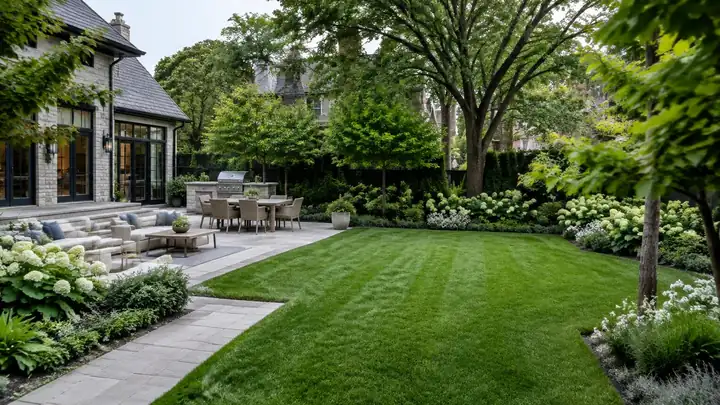
The goal: ground that falls away from the house toward a planned outlet.
The basic rule: slope away from the house
The ground right around a house should slope away from the foundation. A common guideline is a fall of at least 2% for the first few metres, about 2 cm of drop for every metre out. Beyond that, the water needs a path off the lot, often a shallow swale along the side yard toward the street or a rear drain.
Many Ontario municipalities also have lot-grading rules, especially for new homes, that set where water is allowed to go. Regrading should respect those and not push water onto neighbouring properties.
What regrading involves
Locates first. Before any digging, utility locates are requested through Ontario One Call and every buried line is marked.
Survey the existing grades. Elevations are taken around the house and across the yard to see where water goes today.
Design the new grades. High and low points, slopes and outlets are set, sometimes with a drain or dry well where slopes alone can't do the job.
Strip and reshape. Topsoil is set aside, the subsoil is cut and filled to the new shape and compacted in layers.
Replace topsoil and finish. Topsoil goes back on, the final slopes are checked, and the area is sodded or planted.
Site work from above: excavation for new foundations, and a backyard being cleared.
Does it need machines?
Small corrections, such as building up a low bed against the wall, can be done by hand. But moving more than a few cubic metres of soil, cutting a swale, or reshaping a whole backyard is a job for compact excavators and skid steers. On tight urban lots, mini-excavators that fit through a side gate make it possible without disturbing the front yard.
Fix grading before other projects
If you are planning a patio, pool, deck or new garden, grading comes first. A new patio laid on bad grades can trap water against the house, and fixing it afterwards means lifting the patio. Building the right slopes into the base of every new surface solves the drainage problem and the landscape project at the same time.
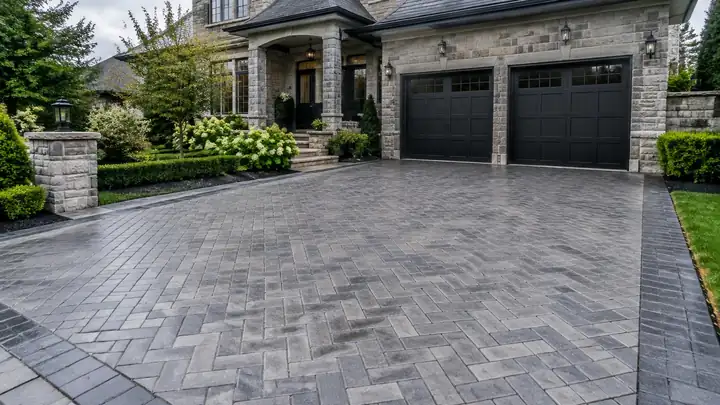
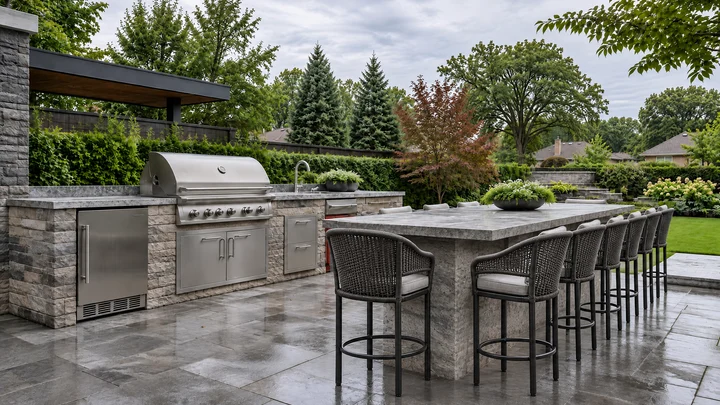
Hardscape goes in only after the grades are set.
Common questions
When is the best time to regrade?
Late spring through fall, when the ground isn't frozen or saturated. Working wet clay compacts it badly, so contractors watch the weather and soil moisture as much as the calendar.
Will regrading kill my lawn?
The areas being reshaped lose their existing turf, since topsoil is stripped and replaced. Most regrading projects finish with new sod or seed, and nearby trees and beds can be protected during the work.
Can I just add soil against the foundation?
Adding soil can help in small spots, but it must not bury the foundation's weeping tile, window wells or siding. Soil piled against siding invites moisture and pests. If the slope problem is wider, proper regrading is the lasting fix.