Native Plants for Toronto Gardens: A Starter Guide
Native plants in Toronto gardens grew in southern Ontario long before gardens did. They are adapted to our winters, our summer dry spells and many of our soils, and they support the insects and birds that evolved alongside them.
A native garden doesn't have to look wild. Planned well, it can be as tidy as any border, with less watering and fewer replacements. Here is how to start.
Why choose native plants?
✓Once established, many need little or no watering beyond normal rainfall.
✓They are hardy through Ontario winters without special protection.
✓They feed native bees, butterflies and birds; monarch caterpillars, for example, eat only milkweeds.
✓Deep-rooted natives help rain soak into the ground instead of running off.
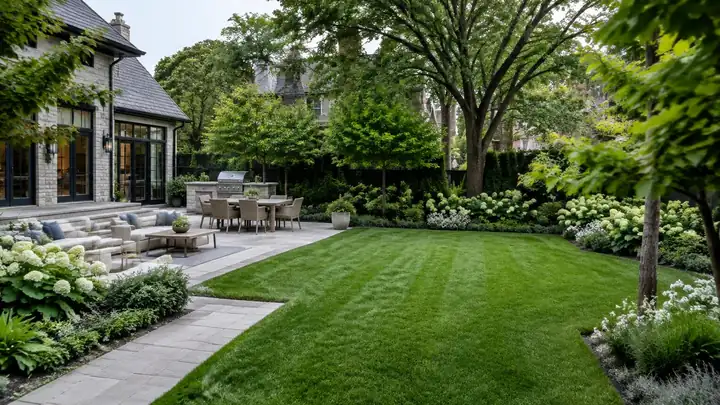
A planned border can be as structured as any traditional garden.
Match the plant to the spot
The most important step is choosing plants for the conditions you have, not the ones you wish you had. Note how many hours of sun each bed gets, whether the soil stays wet or dries out quickly, and whether it is heavy clay (common across much of Toronto) or lighter and sandy.
Reliable natives to start with
Sunny beds
•Black-eyed Susan (Rudbeckia hirta): bright yellow flowers through late summer.
•Wild bergamot (Monarda fistulosa): lavender blooms loved by bees.
•New England aster (Symphyotrichum novae-angliae): purple flowers that carry pollinators into fall.
•Little bluestem (Schizachyrium scoparium): a compact grass that turns copper in autumn.
Part shade
•Wild columbine (Aquilegia canadensis): red and yellow spring flowers for early hummingbirds.
•Pennsylvania sedge (Carex pensylvanica): a fine, low groundcover for dry shade.
•Foxglove beardtongue (Penstemon digitalis): white spring flowers on upright stems.
Wet spots
•Swamp milkweed (Asclepias incarnata): pink flowers, another monarch host.
•Blue flag iris (Iris versicolor): for the soggiest corners.
Shrubs and small trees
•Serviceberry (Amelanchier): white spring flowers, summer berries and orange fall colour.
•Ninebark (Physocarpus opulifolius): tough, with peeling bark for winter interest.
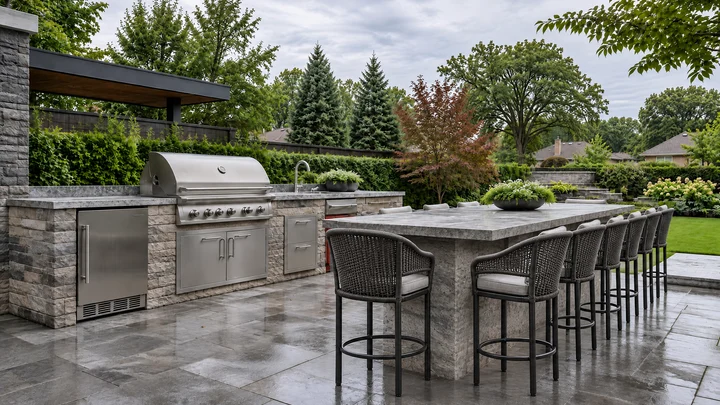
Group plants and edge beds cleanly, in sun or shade.
Make it look intentional
The difference between a native garden that looks planned and one that looks neglected is mostly design. A few habits help:
✓Plant in groups of three, five or more of the same plant, instead of one of everything.
✓Keep a crisp edge between the bed and the lawn or path.
✓Use a lower plant or grass along the front of the bed.
✓Leave seed heads standing over winter for birds and structure, then cut back in spring.
Planting and first-year care
Spring and early fall are the best planting windows. Water new plants regularly through the first season while their roots establish; after that, many natives manage on rainfall. Mulch between plants to hold moisture and suppress weeds until the plants fill in.
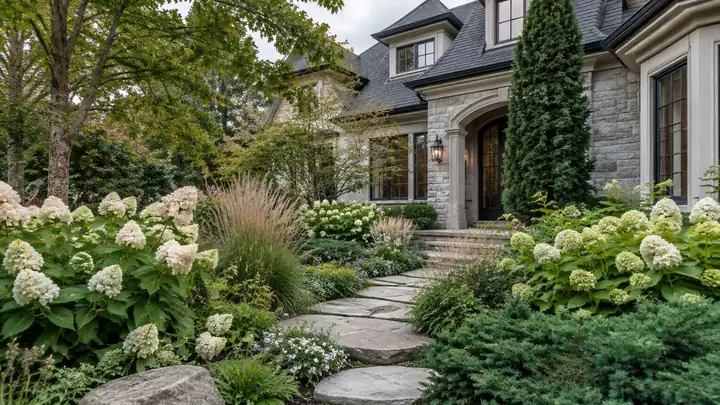
Regular watering and mulch in year one; much less care after that.
Common questions
Are native plants messy?
Not if they are planned. Planting in groups, edging beds and choosing compact species keeps a native garden tidy. Leaving some stems over winter is a choice that helps birds and insects, not a requirement.
Can I mix native and non-native plants?
Yes. Many gardens blend natives with well-behaved non-natives. Even replacing part of a border with natives adds food and habitat. Avoid plants known to be invasive in Ontario.
Do native plants need fertilizer?
Usually not. Many natives are adapted to average or lean soils, and too much fertilizer can make them floppy. Compost when planting is generally enough.
Want a garden that looks after itself?
We design and plant gardens around your site's sun, soil and drainage, including native and pollinator plantings, and we can top them off with the right mulch and soil. Book a free estimate.